
Aligned, Owned, Ready: Why CRM Data Governance in Higher Education Is More Urgent than Ever

Higher ed CRM data governance: use three tests (Aligned, Owned, Ready) and three 30-minute exercises to find definition and ownership gaps before AI inherits them.
NACAC 2026 Reflections | Human Capital Education
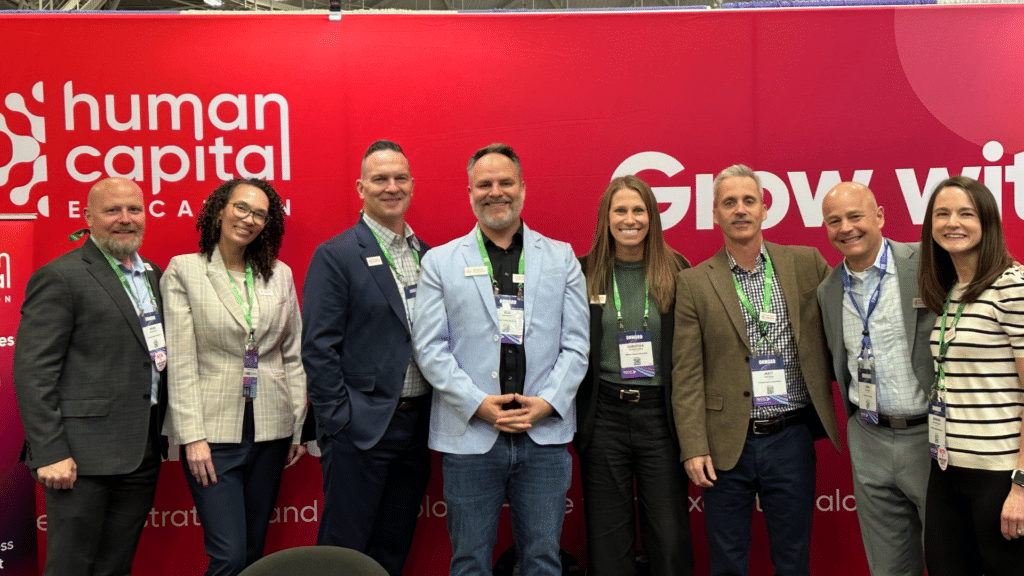
Human Capital Education attended NACAC 2026. Our relection goes beyond key metrics like applications, deposits, yield, melt, and net tuition revenue.
The 800 Hours That Explain Why AI Is Here to Stay

By Mickey Baines. As enrollment teams increase the volume of outreach, engagement, and analysis across the funnel, the challenge is no longer access to data—it is understanding what that data actually means.
Institutions today can see more of the student journey than ever before. Email engagement, website activity, event attendance, application progress, and interactions across multiple systems all contribute to a growing pool of observable behavior. In theory, this level of visibility should make it easier to understand intent, prioritize efforts, and guide students more effectively toward enrollment.
Winning in a Saturated Master’s Market: How Universities Must Rethink Their Online Strategy

By Heli Frazier. The online graduate market has entered a new phase—defined not just by growth but also by intensifying competition, shifting learner expectations, and increasing scrutiny of return on investment.
There Is No “Right Price”: Interpreting Your NTR Position

By Jamie Swartzer. Before reading further, you may want to start with our NTR diagnostic quiz. If you have not taken it yet, it can provide helpful context by showing how your institution’s net tuition revenue compares with broader market patterns.
Beyond “College Costs Too Much”: Net Tuition Revenue, Enrollment Pressure, and the New Pricing Reality

By Jamie Swartzer. A family sees a $70,000 tuition and recoils – that’s more than a new luxury car – but is relieved when they receive their financial aid package and see an actual net price of closer to $30,000. It’s still expensive – and for many families, still a significant stretch – but it’s much more manageable. That gap between sticker price and what families actually pay has widened over the past decade, and it’s at the heart of a shift in higher education economics. Even as sticker prices have risen, the relationship between what families pay and what institutions have retained has evolved in more complex ways.
Benchmark Your Net Tuition Revenue: A Quiz for Private Institutions

Private colleges and universities operate in a complex pricing environment where net tuition revenue depends on multiple interrelated factors. This quiz is designed to take key details about your institution and generate an estimated net tuition revenue based on those inputs.
Better AI Output Starts Before the Question Is Asked

By Mickey Baines. Over the past few weeks, I’ve sat with a handful of senior leaders who told me they were using AI regularly. They weren’t wrong. They were in ChatGPT, Copilot, and other tools, asking questions, generating content, and exploring ideas as part of their day-to-day work.
When AI Pilots Show Promise, But Outcomes Stay Flat

By Mickey Baines. As institutions begin exploring new approaches to better interpret and act on student signals, AI is often one of the first places they turn.
In many cases, that exploration starts with pilots.
Teams begin applying AI to specific parts of their work—drafting and refining email and text campaigns, testing subject lines, responding to inbound student questions more quickly, or summarizing student records to prepare for outreach. Advisors and student support teams use it to triage common questions, identify next steps for students who have stalled, or capture and organize notes from prior interactions. Leadership teams use it to analyze large data sets, surface trends, and move more quickly from information to decision.
When More Data Makes It Harder to Know What Matters
By Mickey Baines. As enrollment teams increase the volume of outreach, engagement, and analysis across the funnel, the challenge is no longer access to data—it is understanding what that data actually means.
Institutions today can see more of the student journey than ever before. Email engagement, website activity, event attendance, application progress, and interactions across multiple systems all contribute to a growing pool of observable behavior. In theory, this level of visibility should make it easier to understand intent, prioritize efforts, and guide students more effectively toward enrollment.